HeatSync
Roles
Concept Designer, Interaction System Mapper, CMF Analyst
Brand Translation Study, Functional UI Redesign, Interface Mapping, Form/CAD Exploration, Design Deck
Figma, Blender, Photoshop, Notion, Fusion 360
A hybrid induction cooktop concept that integrates DJ controller elements for playful interaction.
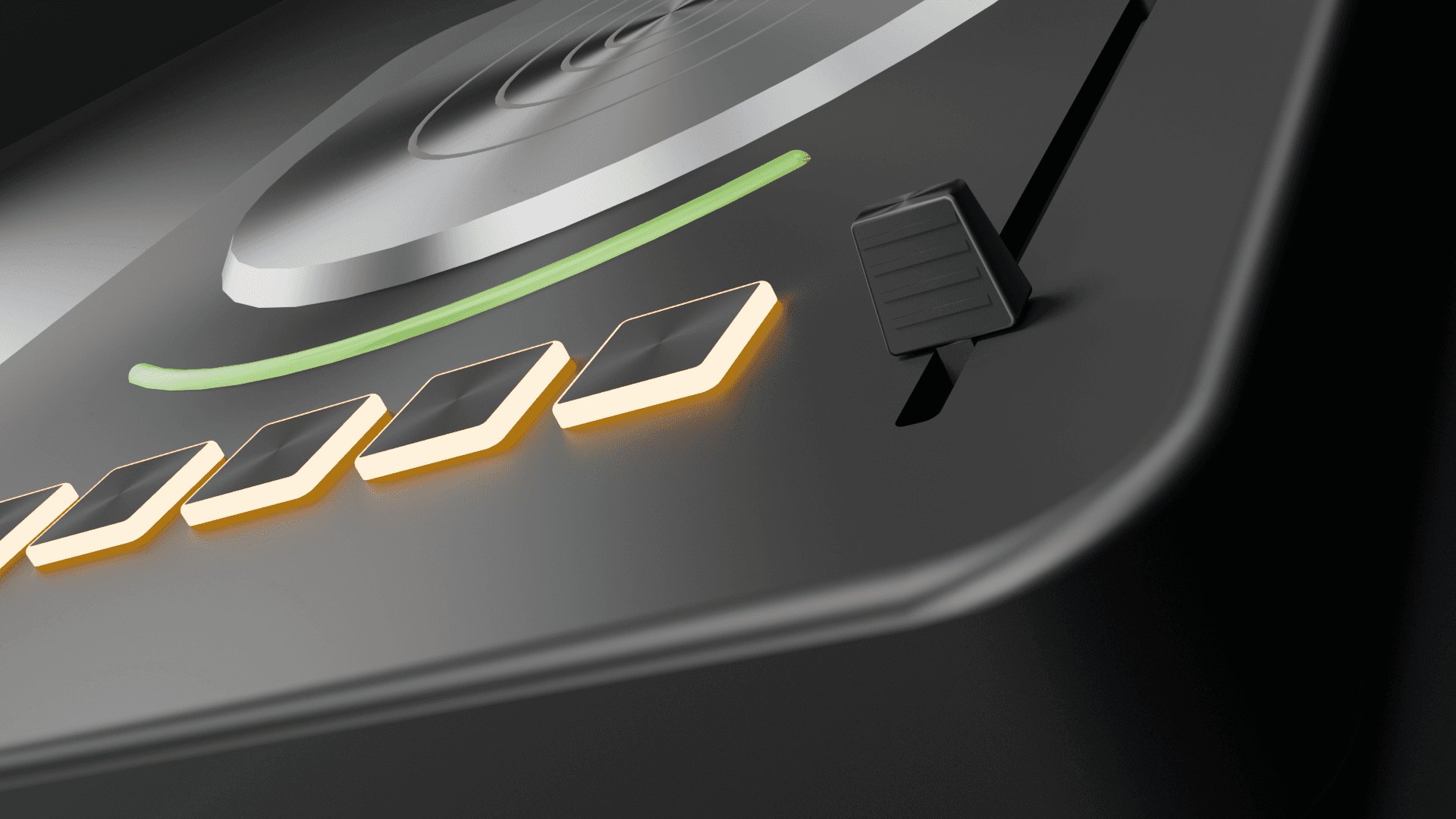
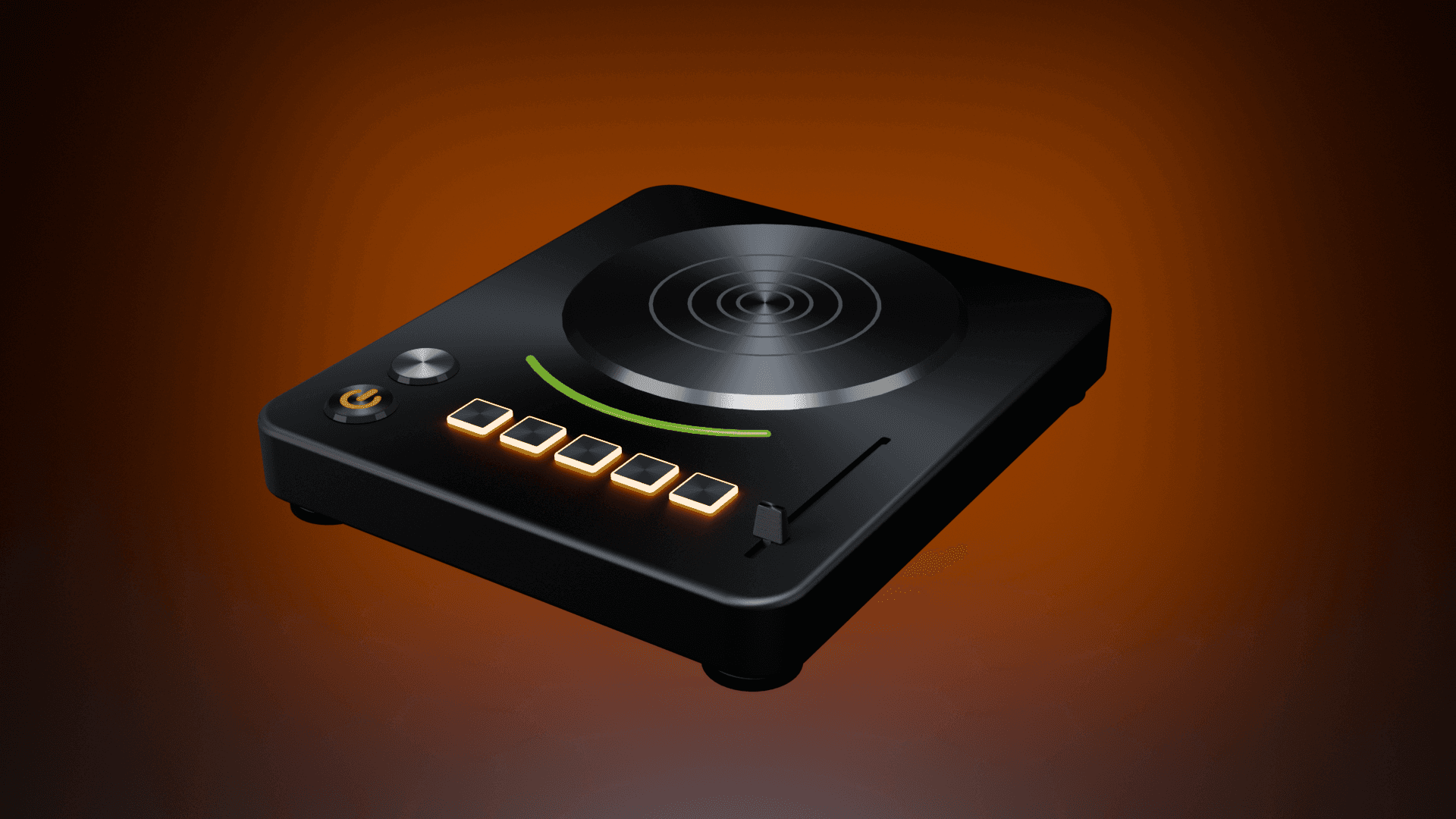

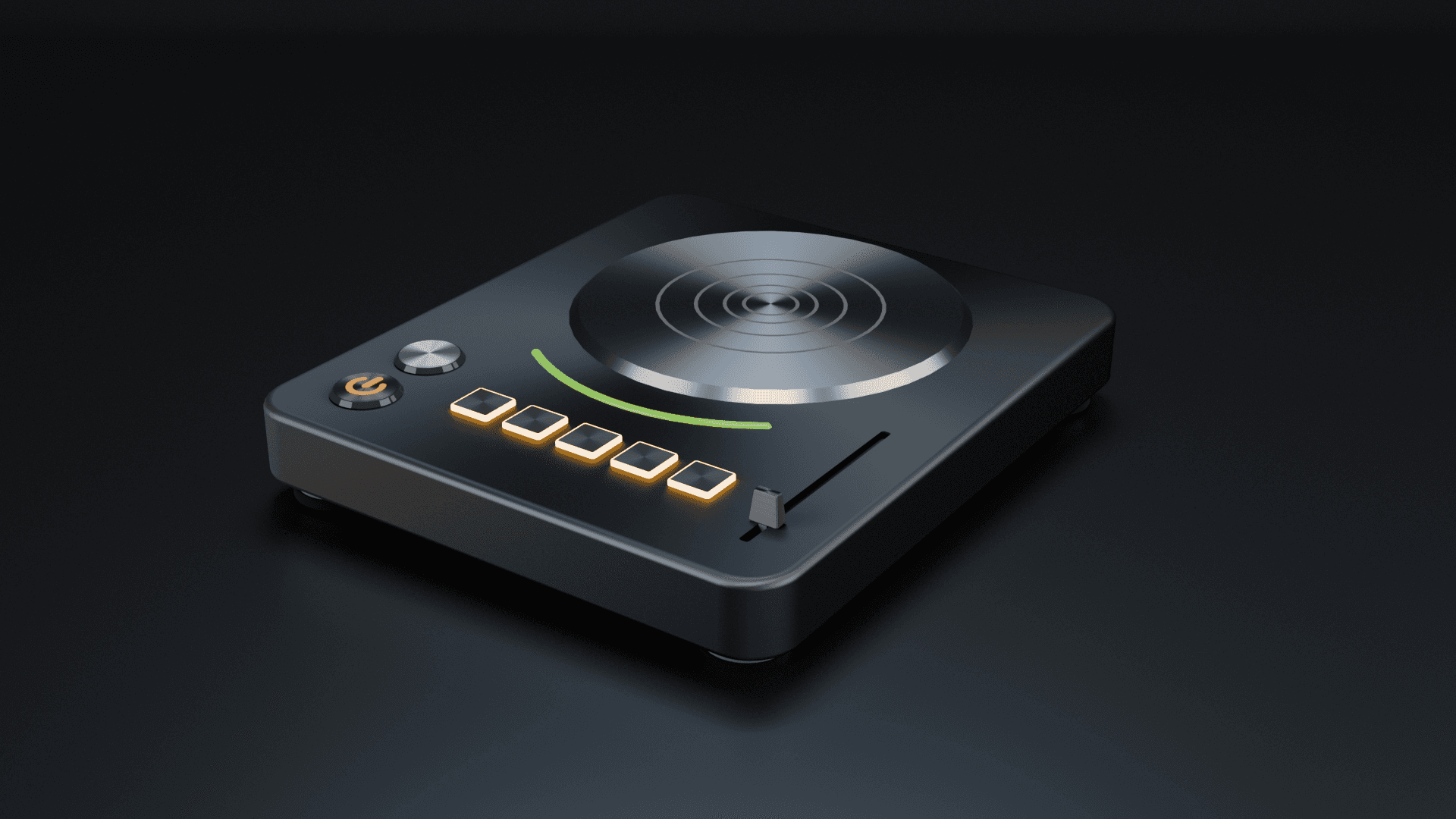


Most kitchen appliances hide behind functional minimalism. HeatSync flips that — blending the precision of an induction cooktop with the expressive interaction of a DJ controller. It’s not just about cooking—it’s about controlling heat like sound.
Key Observations
Conventional induction cooktops have rigid, uninspired UIs with buttons or presets that limit nuance in temperature control.
Timers and feedback indicators are often numerical and impersonal—lacking visual cues for pacing or rhythm in cooking.
Creative control in cooking is tactile and responsive—but current UIs reduce it to input sequences, not gestures.
Design Focus
Inspired by the Pioneer DDJ-FLX4, HeatSync transforms the induction cooktop into an expressive control surface. Jogwheel-inspired sliders and circular touch zones replace generic flat buttons, letting users ‘mix’ their cooking flow with fine-grained control and visual rhythm feedback.
Process Flow
1. Benchmarking + CMF Study
Analyzed form language, interface logic, and CMF of Pioneer DJ hardware. Focused on jogwheel architecture, tactile control elements, and visual affordances.
2. UI/UX Translation
Mapped DJ interactions to heat zones: sliders for temperature, jogwheels for mode shifts, LED ring for time progression. Color-coded feedback replaces numeric-only display.
3. Component Mapping
Defined functional architecture—cooling vents, heat zones, control panel overlays. Proposed layered UI surface with heat-resistant coating and pressure-sensitive input.
4. Brand Language Integration
Used visual and interaction cues from AlphaTheta’s design DNA to create coherence between DJing and culinary control—techno-functionality fused with feedback clarity.
Result
HeatSync challenges what an appliance interface should be. By drawing from expressive interaction paradigms, it turns a passive cooktop into an active control instrument—one where precision and personality converge. It’s not a buttoned-down utility—it’s a performance surface.